
Roof Repairs
Fast, reliable fixes for leaks, slipped slates, storm damage and general wear.
Roof Repairs in Halifax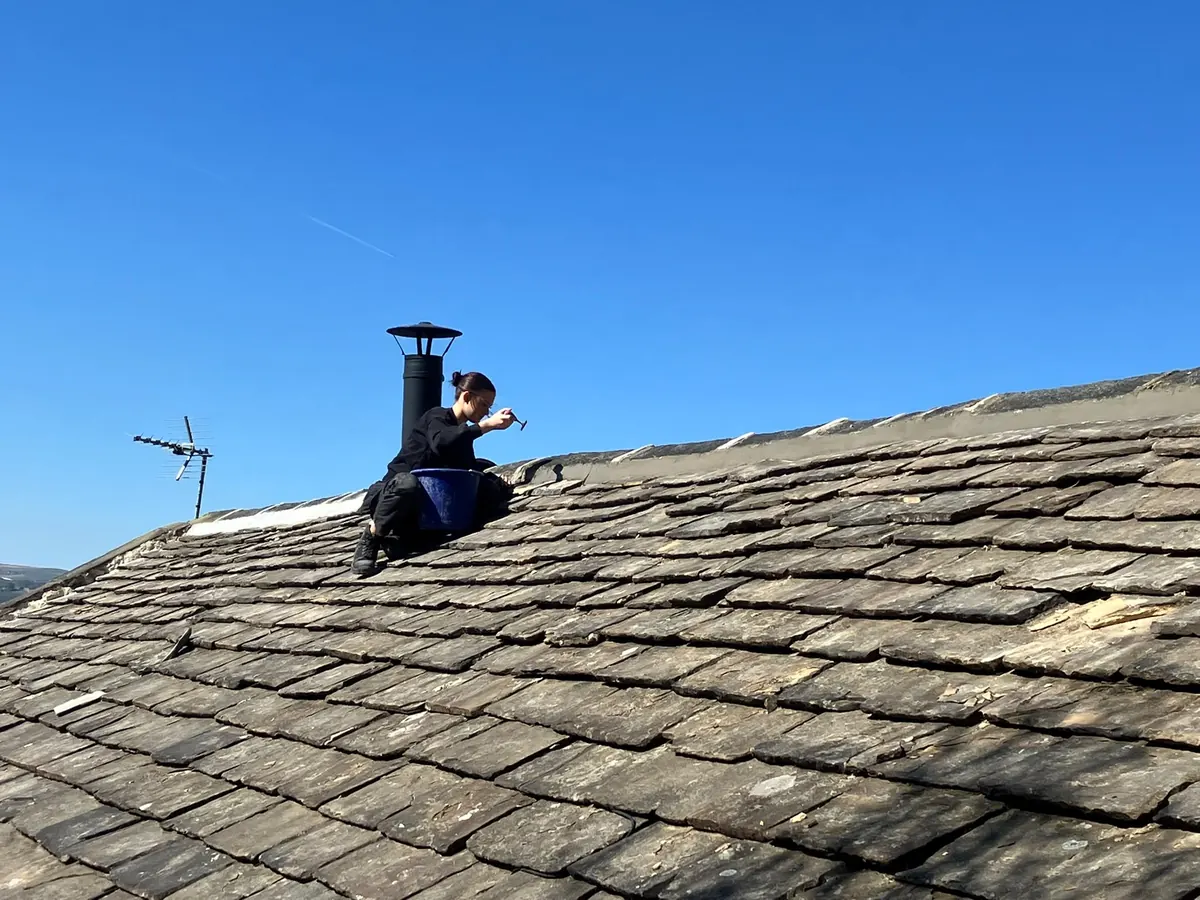
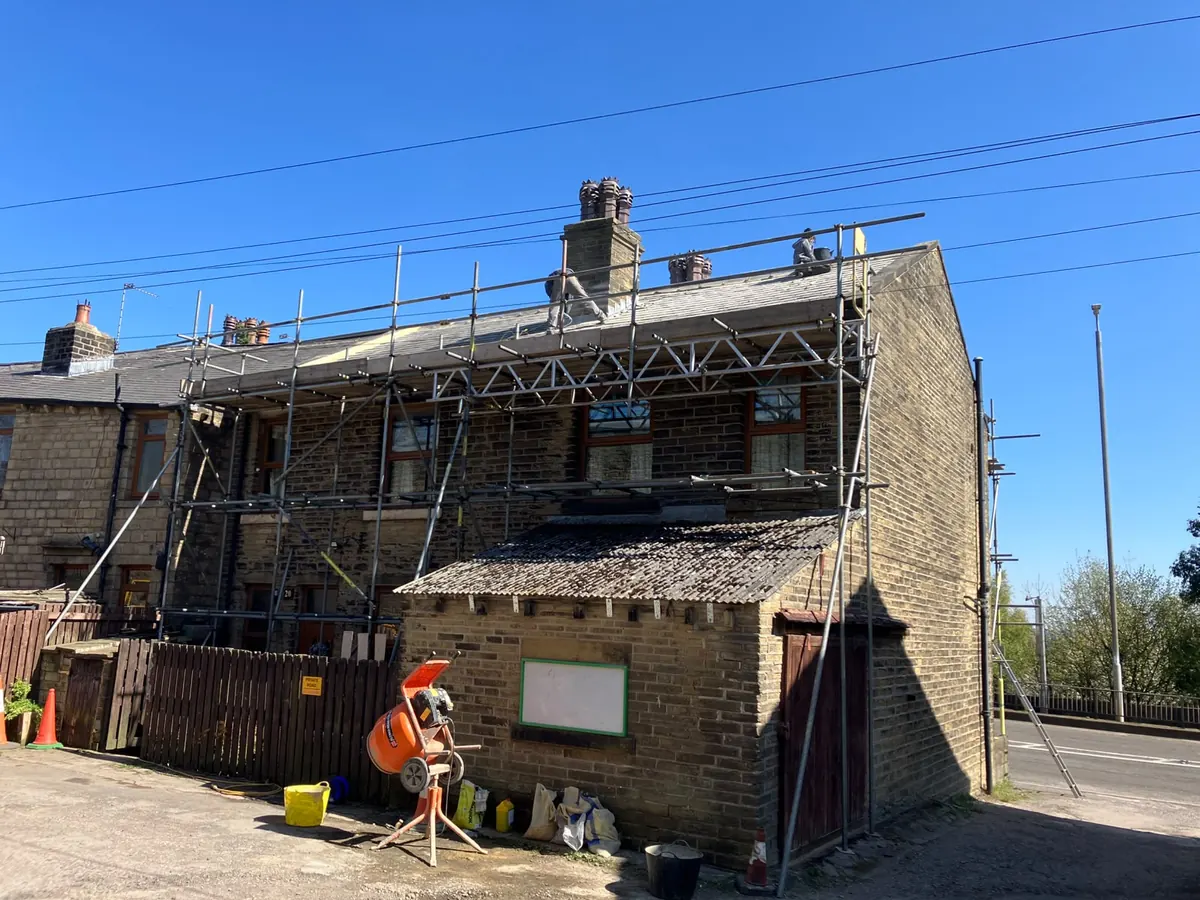
Chimneys are one of the most common places for leaks to start, especially on older Halifax stone properties. We handle repointing, flashing and stack repairs to keep them weathertight.
A chimney with failed pointing or damaged lead flashing lets water track down inside the wall, often showing up as a damp patch nowhere near the actual chimney. We check the stack, the flashing and the pot before recommending any work.
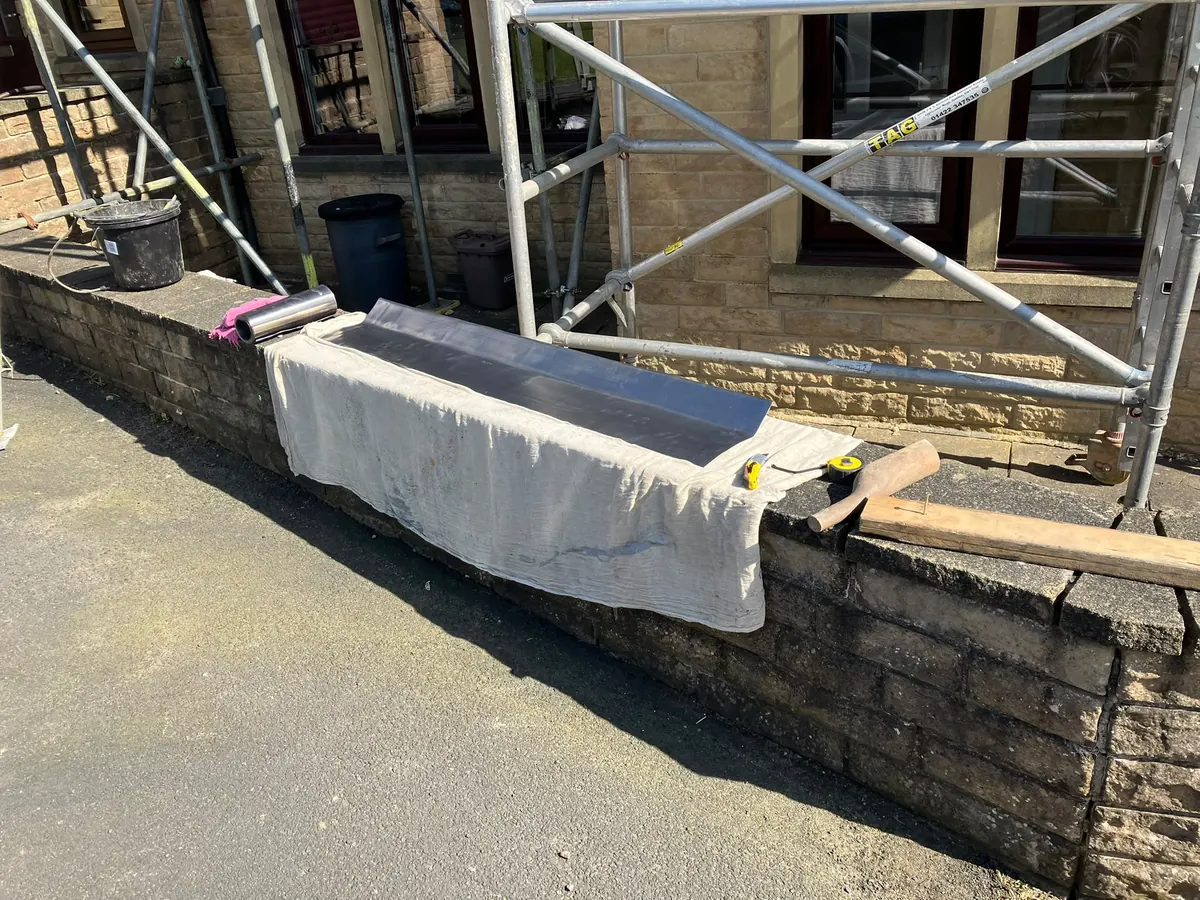
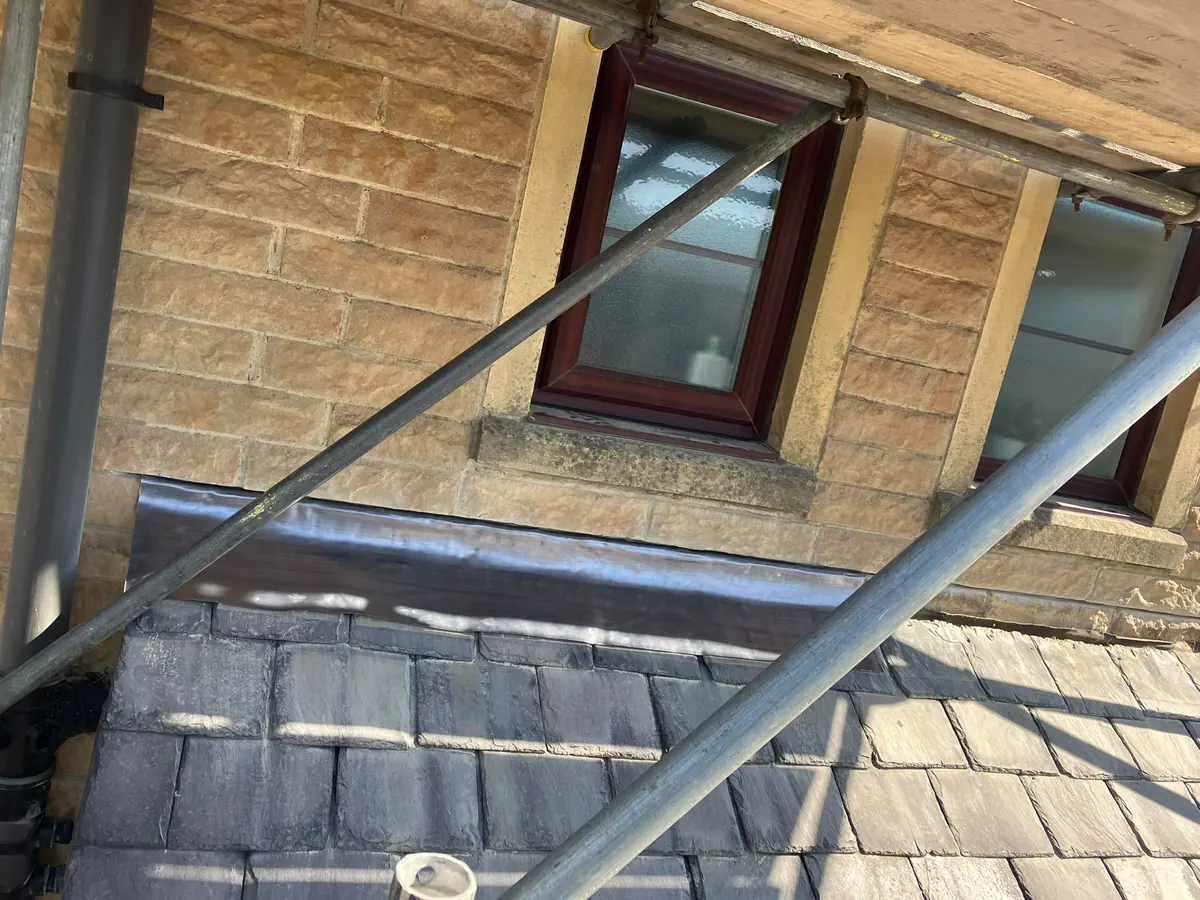
On older stone chimneys we repoint using a mortar appropriate to the property, and renew lead flashing wherever it has split or lifted.
Chimneys have a harder life than the rest of the roof. They stand proud of it, so they take wind and driving rain from every direction, and they are the one part of the structure with joints running right through from outside to inside. On the terraces around Halifax the stacks are often shared, tall and rendered in a mortar that has been weathering since the house was built.
That is why so many 'roof leaks' turn out to be chimney leaks. If the damp in your bedroom is in a chimney breast, on a wall that a stack sits above, or appears only after wind-driven rain from one particular direction, the stack is the first thing worth ruling out.

Chimney Services
The work most often included when we take on chimney services around Halifax and the Calderdale valleys. Anything outside this list, just ask — if it is on a roof, we most likely do it.
What to look for
Chimney faults show up inside the house far more often than on the roof. These are the usual tells.
Staining on the breast in a bedroom or loft is the classic sign of failed flashing or open pointing above.
If the patch appears after wind from one direction and dries out otherwise, water is being pushed through a joint rather than running in from above.
The mortar bed holding the pots in place. Once it cracks, water gets straight into the top of the stack and the pots can work loose.
Pointing that has weathered back or can be raked out by hand is no longer keeping water out of the stack.
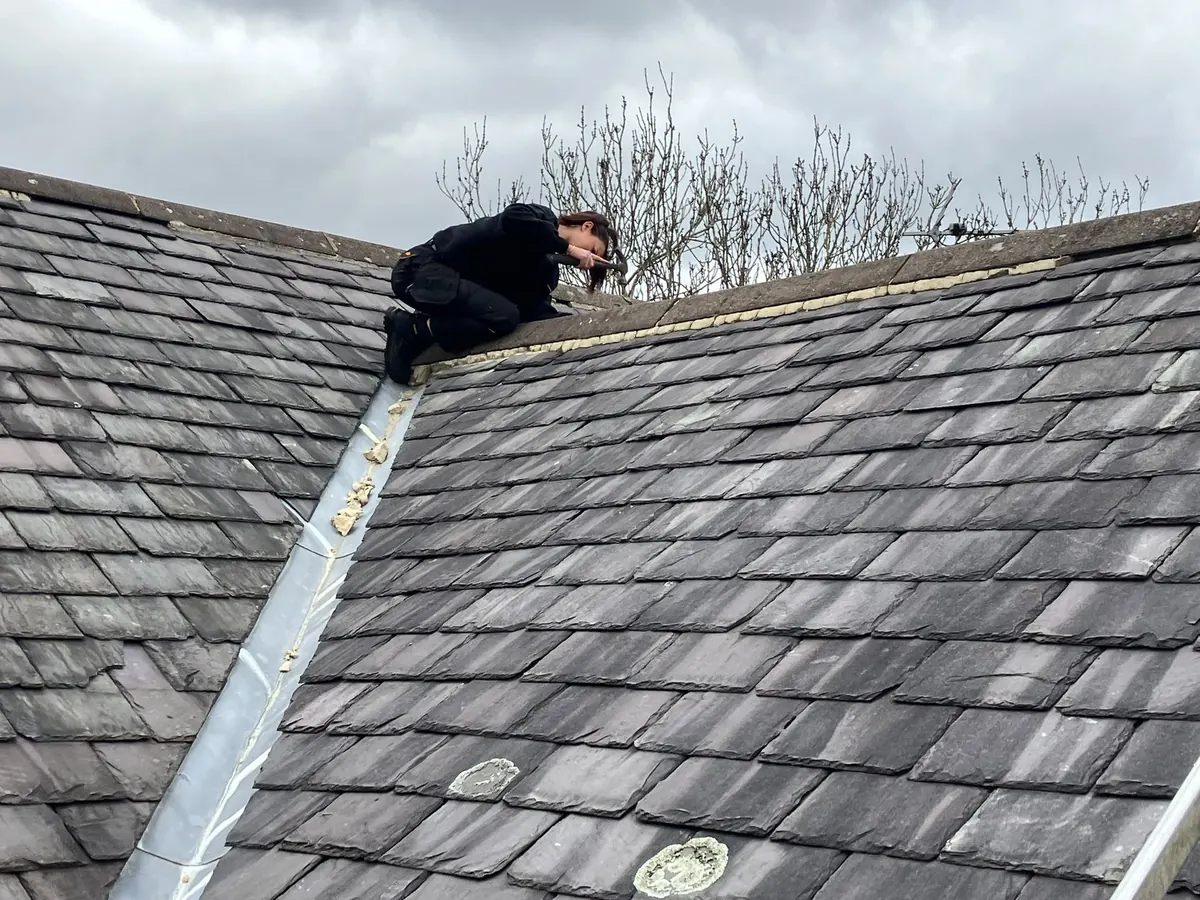
Old flashings fatigue and tear along the fold. Cement fillets used instead of lead crack within a few years and are a frequent cause.
Leaning or bowing means the mortar has degraded through the thickness of the stack, and it needs assessing for safety, not just weatherproofing.
Chimney Services
The joint between a chimney and a roof has to move. Timber and masonry expand and contract at different rates through the year, which is why the correct detail is lead — stepped into the mortar joints on the sides, with soakers interleaved between the slates and a back gutter behind the stack. Lead flexes with that movement and lasts decades.
A cement fillet does none of that. It is quick and cheap, it looks tidy on the day, and it cracks along its length within a couple of winters because it cannot move with the joint. We see it constantly on properties around Halifax, and it is one of the most common causes of a persistent, hard-to-find chimney leak. Where we find one, we cut it out and replace it with lead properly dressed into the stack.
Repointing follows the same logic. A hard cement mortar on a soft stone stack traps moisture in the stone and pushes the damage into the masonry itself, so on period property we use a mortar appropriate to the original construction rather than the strongest mix available.
Chimney Services
The chimney jobs we see most often around Halifax's older housing stock.
Failed joints raked out and repointed in a mortar matched to the stack, so it weathers with the stone rather than against it.
Proper lead stepped flashing, soakers and back gutter — not a cement fillet that will crack again in two winters.
Loose or damaged brickwork and stonework rebuilt and made safe, including full rebuilds above the roof line.
How it works
The same four steps every time, whether it is an emergency callout at two in the morning or a job booked in for next month. You always know what happens next and what it costs before we start.
We look at the stack, the flashing, the flaunching and the pots, and check inside the loft where the damp is showing.
You get a straight answer on which part is actually letting water in, rather than a quote to do everything.
Scaffold or tower where the height needs it, then the repointing, leadwork or rebuild carried out.
Stack left weathertight, debris cleared from the roof and gutters, and the site swept.
Pricing
Chimney jobs are priced off what we find at survey, because how much of the stack needs attention is not something anyone can judge from ground level. The variables:
Where we work
We are based on Pellon Lane in Halifax and cover the town and the surrounding valleys for chimney services — Halifax, Elland, Brighouse, Sowerby Bridge, Mytholmroyd, Hebden Bridge, Ripponden, Illingworth, Ovenden, Siddal, Southowram, Northowram, Queensbury, Stainland, Luddendenfoot and Warley. If your village is not on the list, it is worth a call anyway; we work well beyond the places named here.
FAQs
Damp on a chimney breast, staining in the loft around where the stack passes through, or a patch that only appears after wind-driven rain from one direction all point at the stack. We check inside the loft as well as on the roof so the diagnosis is based on evidence rather than assumption.
Often, yes. Anything beyond a very quick inspection on a low stack needs a safe working platform, and on a tall or mid-terrace stack that means scaffold. We include it in the quote rather than adding it afterwards, and we arrange it as part of the job.
If the mortar has weathered back but the stone or brick is sound, repointing is the right job. If the stack is leaning, the masonry itself is spalling, or the joints have gone right through the thickness, rebuilding above the roof line is the more sensible spend.
Yes. Redundant stacks can be taken down to below roof level and the roof made good over the top, which removes a long-term maintenance liability. We'll advise on whether the flue needs capping and ventilating rather than sealing entirely.
The most common reason we find is a cement fillet used instead of lead flashing. It cracks along its length within a couple of winters because it can't move with the joint. Replacing it with properly dressed lead usually solves a leak that's been chased for years.
Yes — cowls, pots and new flaunching, whether you're capping an unused flue, stopping rain entering an open pot, or dealing with a downdraught problem.
Other services
Fast, reliable fixes for leaks, slipped slates, storm damage and general wear.
Roof Repairs in HalifaxComplete new roofs for extensions, rebuilds and full re-roofing projects.
New Roofs in HalifaxFlat roof repairs and replacements for extensions, garages and commercial units.
Flat Roofs in HalifaxSkylights, roof windows, solar mounts and roofline installations.
Roof Installations in HalifaxMoss removal and roof cleaning to protect tiles and clear blocked gutters.
Roof Cleaning in Halifax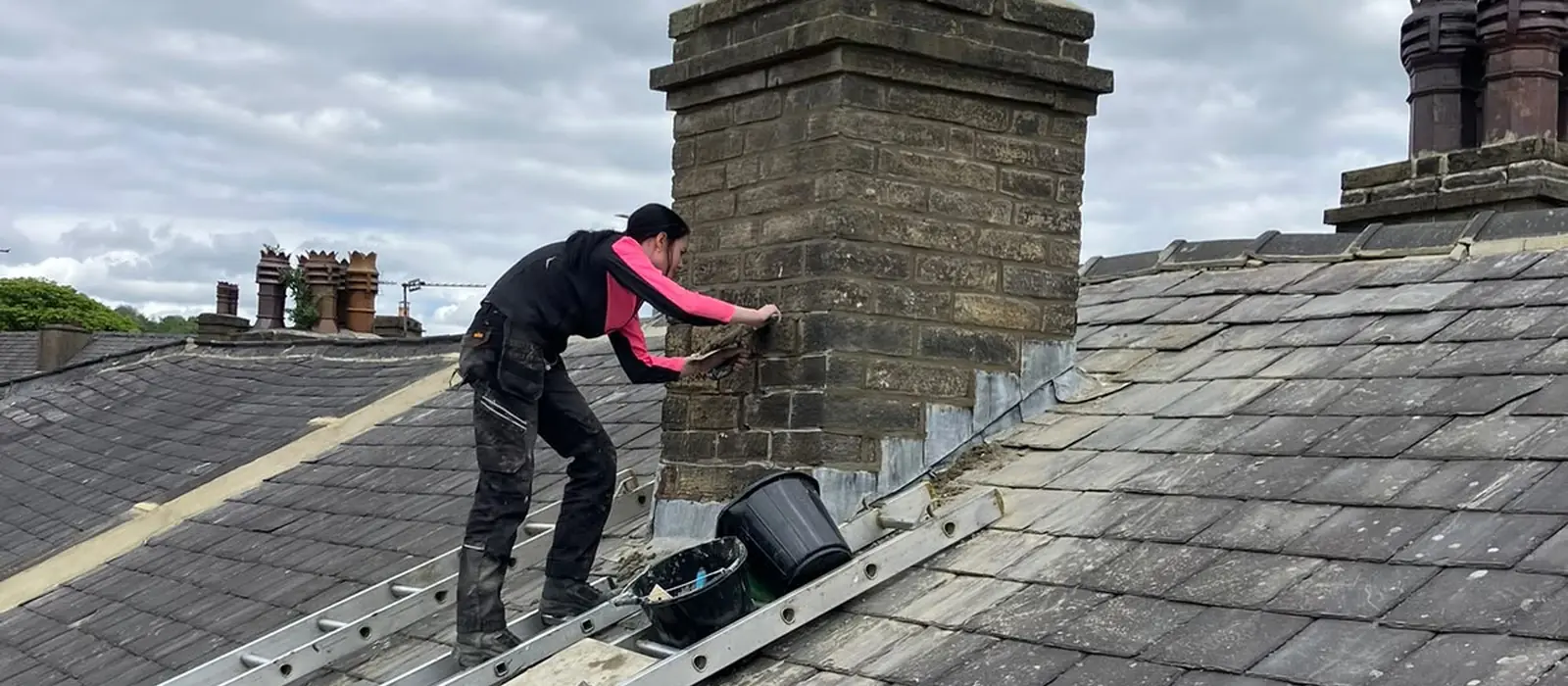
Call now for a free, no-obligation quote on chimney services in Halifax — open 24 hours.